Romney Hythe & Dymchurch Railway Supporters Association
Armoured Wagon Project

The RH&DRSA are pleased to announce that we will be funding/project managing the restoration of the armoured wagon. A history of the Armoured Wagon can be found here – Armoured Train. The project wouldn’t be possible without the successful monetary grant from The Heritage Fund.
The National Lottery Heritage Fund is the largest funder for the UK’s heritage. Using money raised by National Lottery players we support projects that connect people and communities to heritage. Our vision is for heritage to be valued, cared for and sustained for everyone, now and in the future. From historic buildings, our industrial legacy and the natural environment, to collections, traditions, stories and more. Heritage can be anything from the past that people value and want to pass on to future generations. We believe in the power of heritage to ignite the imagination, offer joy and inspiration, and to build pride in place and connection to the past.
Using money raised by National Lottery players, The National Lottery Heritage Fund supports projects that connect people and communities with the UK’s heritage. The Armoured Wagon Project is made possible with The National Lottery Heritage Fund. Thanks to National Lottery players, we have been able to fund the restoration of the armoured wagon to preserve, protect and promote this historically significant piece of rolling stock.
Project Updates
October 2025 – Armoured Engineering have been instructed to commence works on the Armoured Wagon Project. More project updates will follow in due course.
December 2025 – Armoured Engineering made a site visit in late October to measure various bits and pieces (measure it twice cut it once!). They are now well down the road of translating these – plus the original drawings into a CAD design. Once they have finished this bit, they will be signed off – then go to cutting out of metal stage.
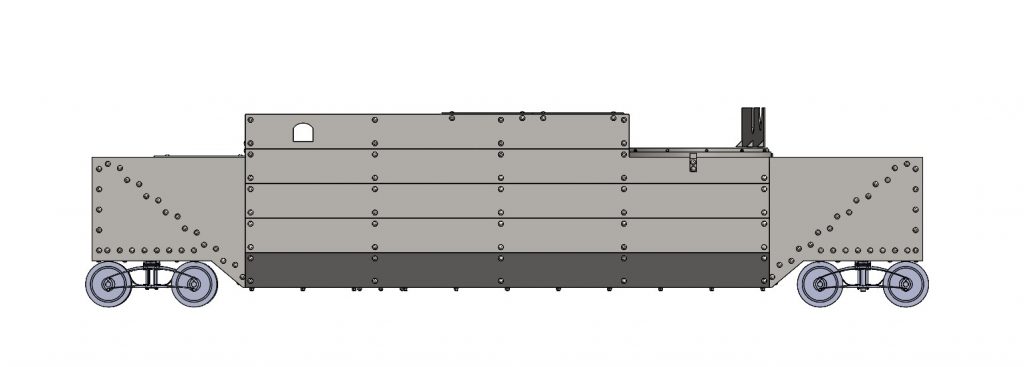
April 2026 – At the time of writing, the drawings of the armoured wagon are being studied by Paul Trotter. Once they have been signed off, then Armoured Engineering will be able to order the materials and construction can start. This is a very important part of the process, as we must make sure that everything is correct, in the words of old carpenters – “you measure it twice ‘cos you can cut it only once”!
During the process of finalising the drawings, Gavin and Ollie of Armoured Engineering spent many hours poring over the 1940s cine footage. One thing that struck them was that many of the steel sections that were used in the construction were very corroded and pitted.
Another feature that puzzled them was the D-shaped holes in the sides. Something that would have taken some effort to create when all one would have needed was a simple hole to stick a rifle through) – so probably the D pre-existed.
Their searches turned up images of U-118 which was beached at Hastings in 1919 whilst being towed across the channel. It was a spectacle for some years, before being cut up in the mid-20s. Close examination of the side plates revealed them to be not only of a similar size and shape to those used in the wagon’s construction – but also similar pitting could be clearly seen. Finally, there were the D cut-outs, which matched foot holds ascending the hull. So could it be that the original wagons were in part made from the scrounged remains of a WWI German U boat! After all, in 1940, with the state of emergency in place one could not have gone to the nearest steel stockist and ordered new plates. Sadly, we will never know, but the evidence is compelling.
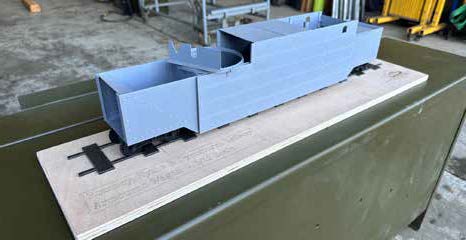
May 2026 – With the steel now on site and drawings signed off, it’s time to cut, weld and rivet* the various pieces. *For ease of assembly/disassembly, TCB bolts have been used to join parts together. These bolts are designed to look like rivets to be inkeeping with the intended look of the wagon from the 1940’s.
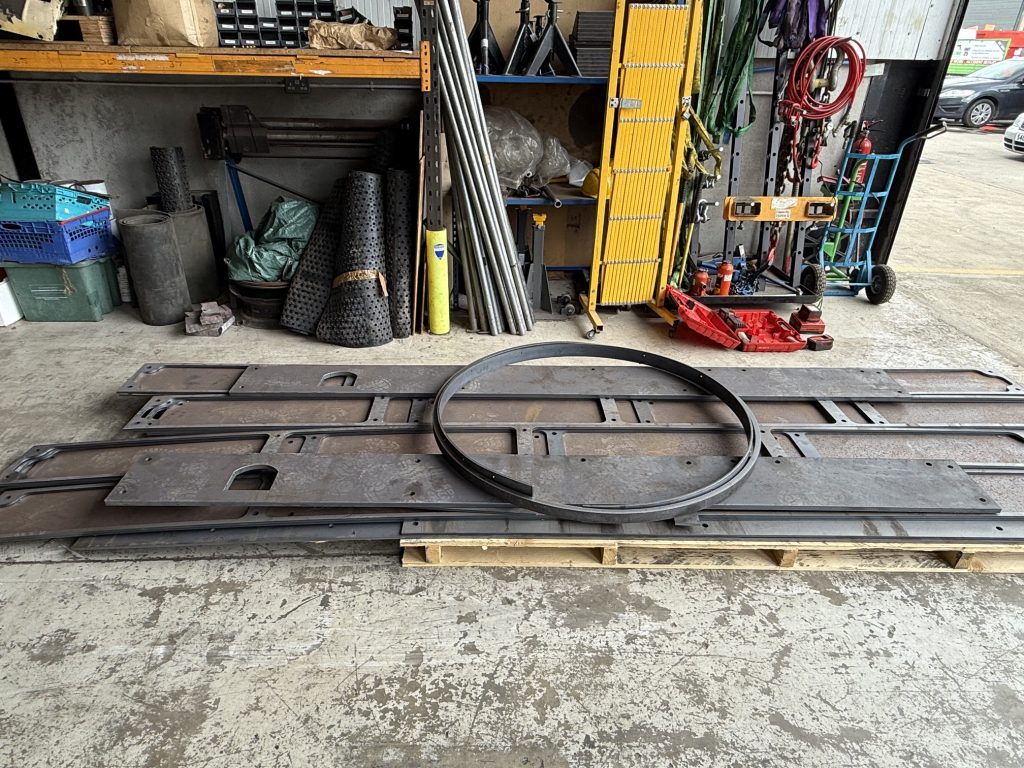
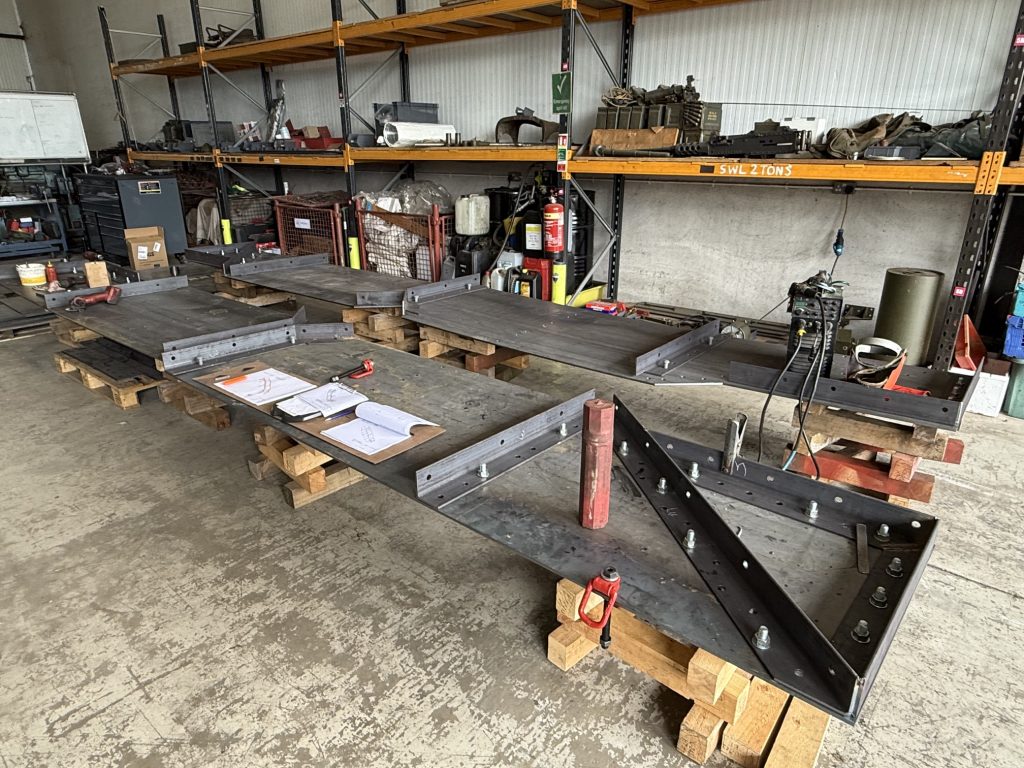
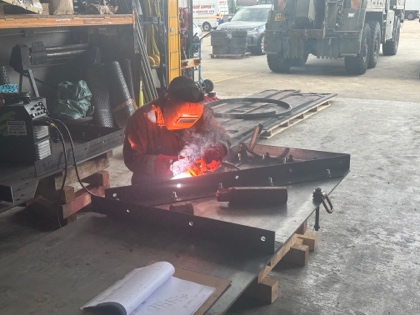
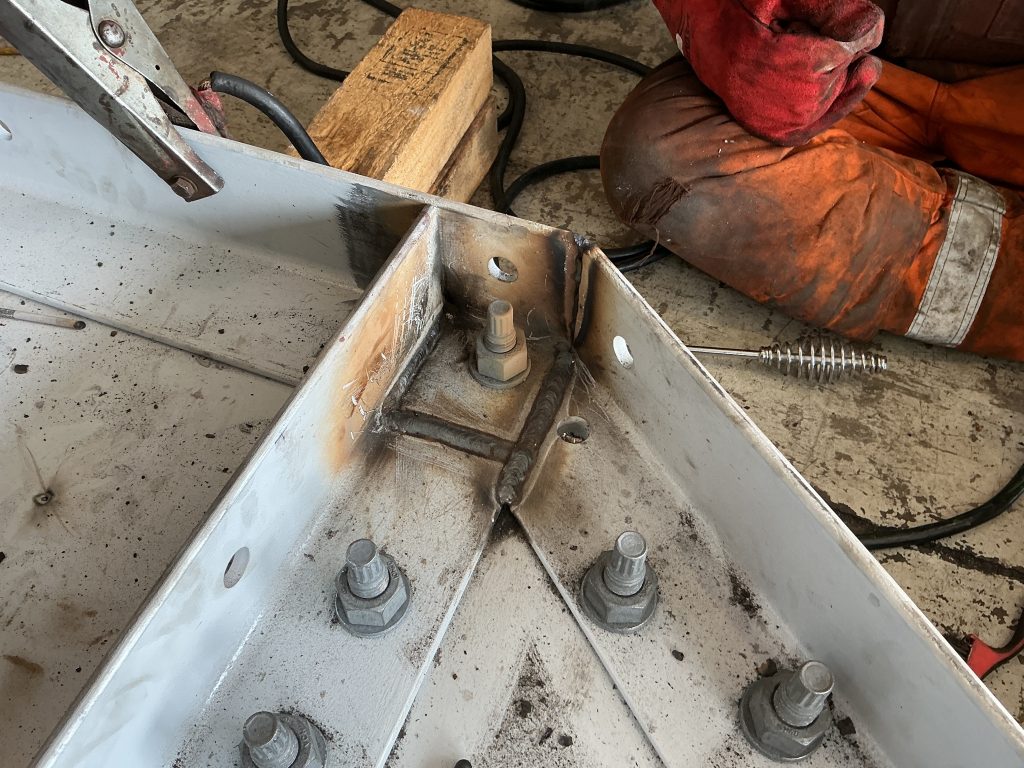
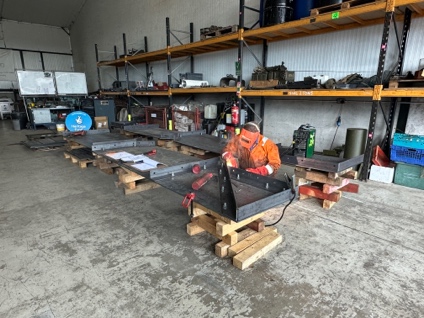
June 2026 – Assembly of the Armoured Wagon is now complete after the painting of primer. Next steps are to tighten all bolts, nuts and rivets before lifting the wagon the correct way round to enable the completion of the top panels and gun ring.
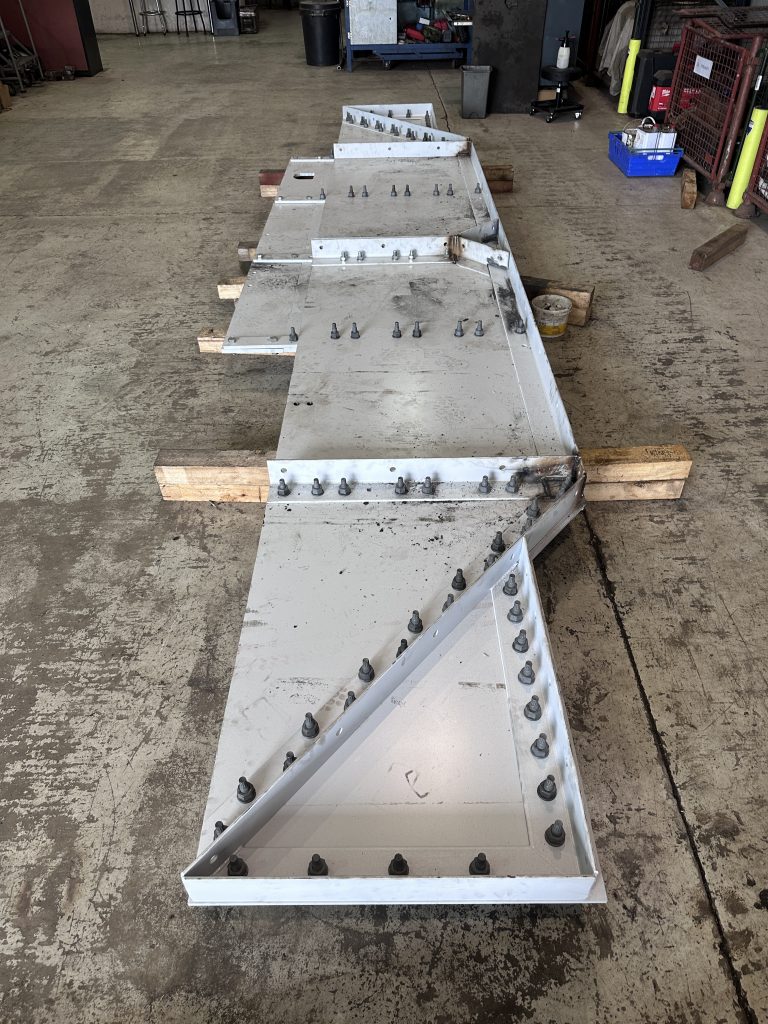
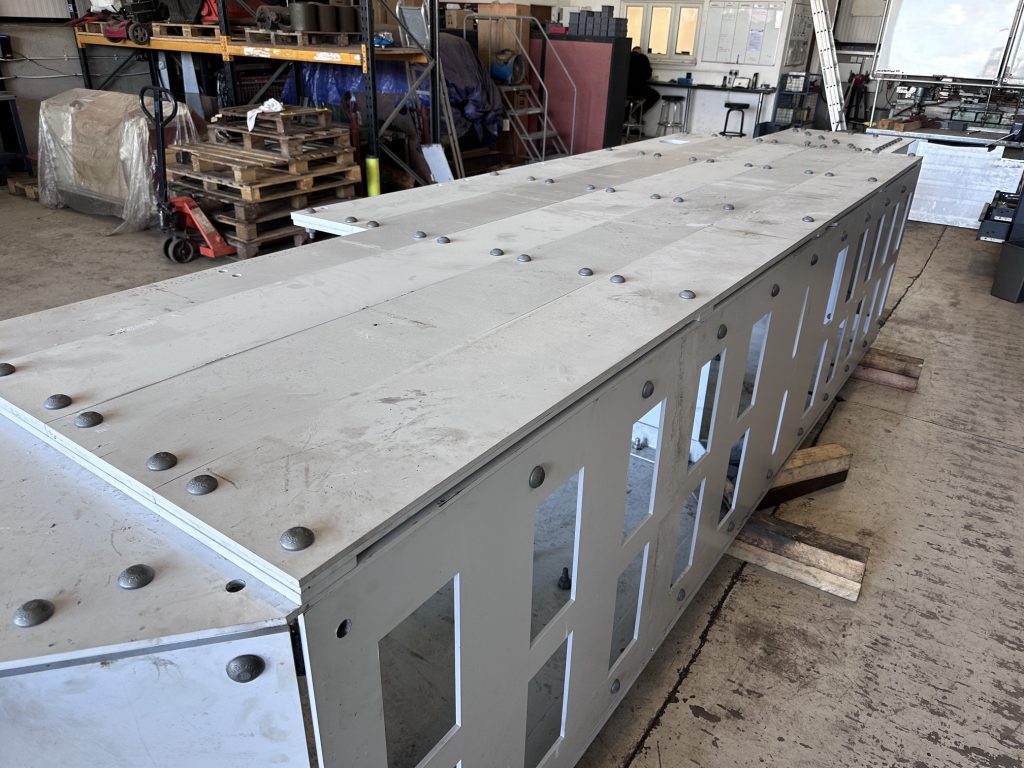
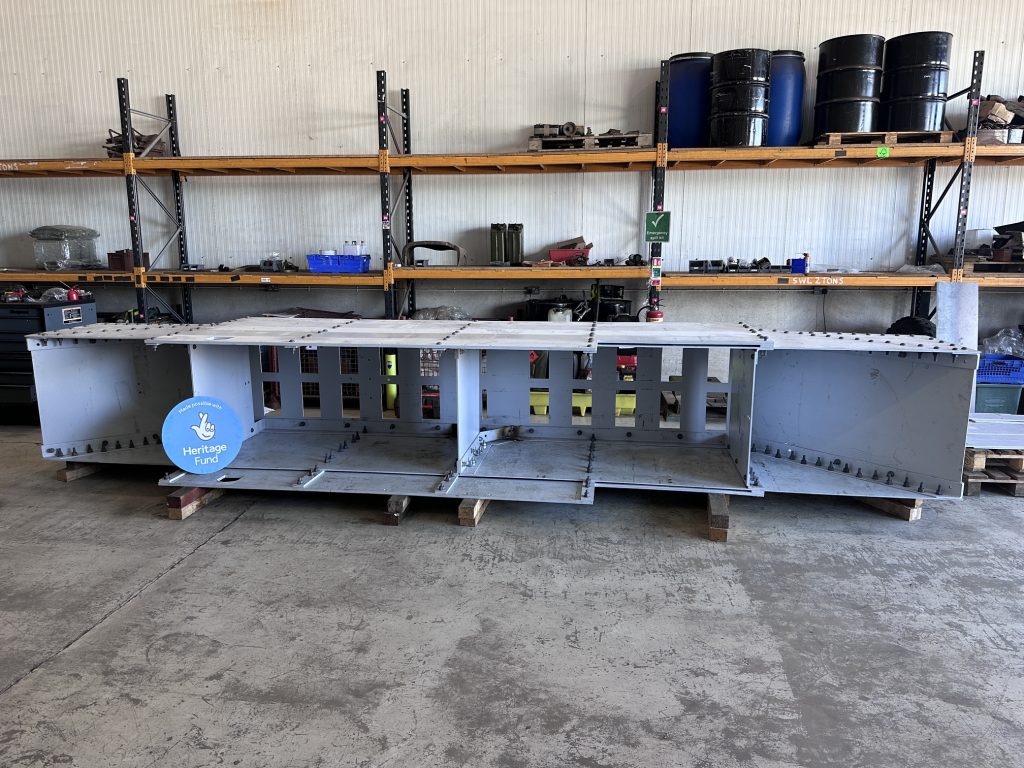
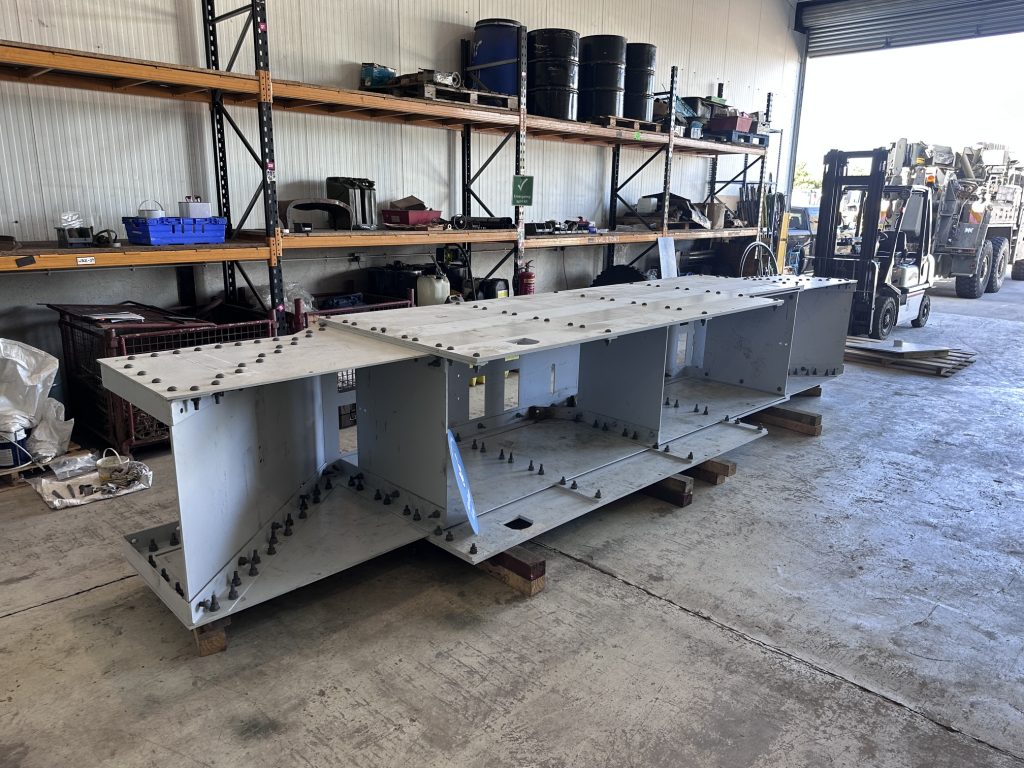
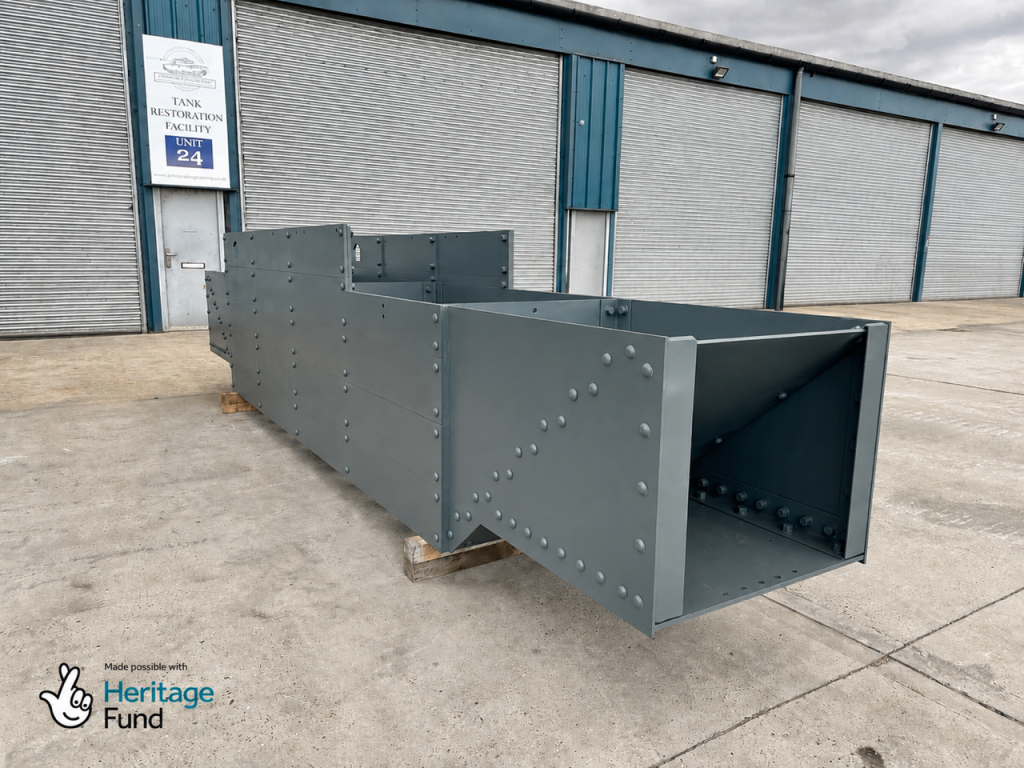
August 2026 – The Armoured Wagon is now complete after painting of its top coat. It’s now the right way up with the rivets/bolts ground down to a smooth surface for authenticity. We now await its transport to New Romney where it’ll be lowered on to bogies and gauged to suit running on Romney rails.